- 2025-11-21
- Technical
- By Pyxis Communication
Human-Centered Software Engineering in the Age of AI: The Chucky Way
By Diego Vallespir & Paula Sajevicas
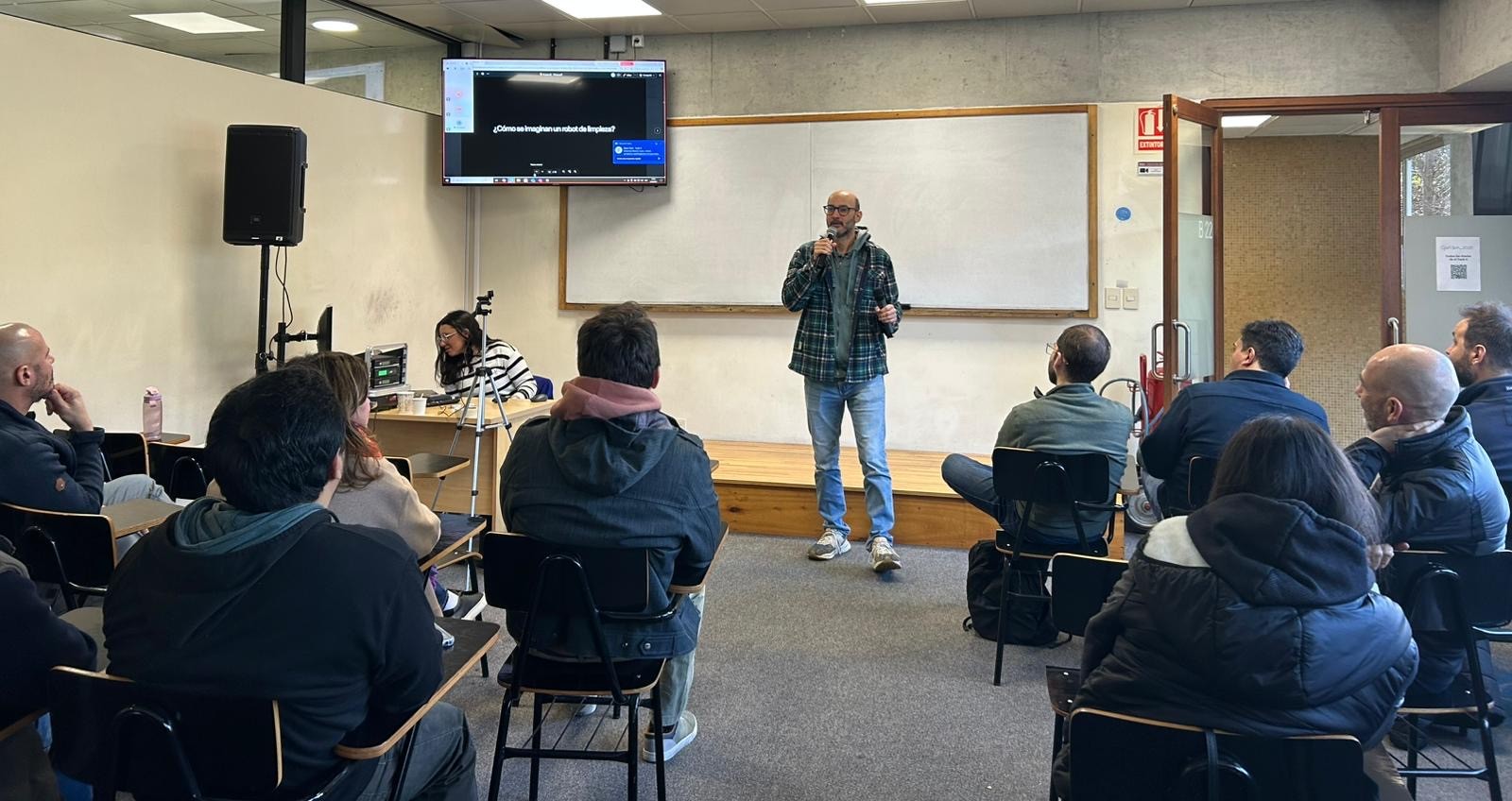
Article based on the talk by Diego Vallespir – Head of Research at Pyxis – presented at Open Tech 2025 on Saturday, September 6, 2025.
Summary
Artificial intelligence is reshaping software engineering in ways we’re only beginning to understand. This talk by Diego Vallespir explored how AI transforms not only the tools we use, but the way we think, collaborate, design, and build software. With humor (and a slightly unstable AI assistant named Chucky), Diego reflects on why the future of engineering must remain deeply human—even as AI becomes a central part of the process. The challenge isn’t “adding AI” to everything, but rethinking problems, products, and processes with purpose, ethics, and creativity.
The Day Chucky Refused to Present
It all started with a technical (or maybe emotional?) malfunction.
Chucky—my biological, neuroscientific, slightly unstable AI assistant created in the year 2030 using Cobra (a Python evolution language)—flat-out refused to present. He got upset, frustrated, and decided not to speak. I won’t get into the details… you wouldn’t understand. The important part: I came back from the future—yes, literally, like in the movie—to deliver this talk myself.
So without Chucky, there I was: a human being, cold, with a PDF that wouldn’t load, urgently asking myself—and all of you—what exactly is happening with artificial intelligence in our field.
Jokes aside, the point was clear:
AI is already here. Everywhere. And it’s radically changing how we build software.
What used to be a purely intellectual task, partially automated, is now mediated by systems that write, test, predict, and even “comment” on our code. Careful—software development is still intellectual work and increasingly engineering work. But the environment around it is shifting fast.
The Change We Never See Coming
History has taught us that we rarely notice the big technological shifts while they’re happening. By the time we realize what’s going on, it’s too late to keep doing things the same way.
With AI, as with electricity or the internet, the transformation is not just about productivity or speed—it’s a paradigm shift.
We’re not building software the way we did yesterday.
Is this a small transformation or a massive one?
Personally, I believe it’s one of the big ones. I don’t have conclusive evidence—just a strong belief and plenty of signs.
AI Products: It’s Not (Always or Only) About Adding a Chatbot
One of the things I’ve seen a lot lately is the “now it has AI!” fever. Developers, brace yourselves: what comes next might sting.
Many products simply slap on a chatbot widget and declare themselves “AI-powered.”
But adding a smart chat doesn’t mean incorporating intelligence—and certainly not rethinking a product.
Real innovation happens when AI allows us to reframe the problem, and design a different—or better—solution.
It’s not “doing the same thing but with AI.” It’s discovering new problems we can now solve, or new ways of solving old ones thanks to AI.
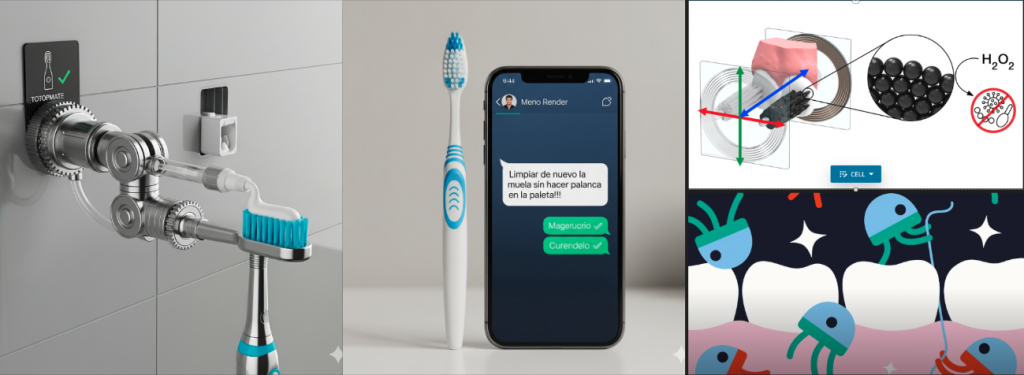
Think of the vacuum cleaner turning into the Roomba—not quite into The Jetsons’ Robotina/Rosie yet, but still a fundamentally new approach. Meanwhile, a toothbrush with a chatbot telling you “brush better” is… useless.
And speaking of toothbrushes: the real leap isn’t a chatty gadget—it’s the emerging research on nanorobots that clean teeth. That’s a different category of solution, enabled by AI and engineering.
Rethinking Products… and Rethinking Clients
When working with clients, we often hear: “I want to do this, but with AI.” The real question should be: “What problem are you actually trying to solve?”
AI is not a feature. It’s an opportunity to reconsider the entire problem space.
At Pyxis, asking that question is almost instinctive. It’s part of our service mindset: standing beside our clients, co-creating AI-driven solutions that genuinely improve their business—not just embedding a trendy tool. This mindset allows our clients to leap ahead and differentiate themselves meaningfully.
Software Engineering Is Reinventing Itself
AI is not only reshaping the products we build—it’s reshaping how we build them. From project management to quality assurance, testing, and collaboration, every aspect of software engineering is being transformed.
AI experience is becoming a critical variable. A junior developer misusing AI can slow the team down; a senior using it well can accelerate everything. And the definition of “using AI well” is something we’re still discovering.
Alongside the opportunities, new questions emerge:
- Does AI make us more creative or more dependent?
- Does it free us from repetitive tasks or make us intellectually lazy?
- Are we trading deep thinking for fast thinking?
Open questions—but ones we can’t afford to ignore.
The Risk of Losing What Makes Us Human
A visible side effect of AI adoption is the slow disappearance of mentorship. Developers who once turned to colleagues now turn to ChatGPT.
We lose conversations, shared reasoning, debates, joint debugging—moments where creativity and craft are formed.
It’s comfortable, yes. But also dangerous. Creativity doesn’t spring only from knowledge—it comes from human interaction, disagreement, collective learning. If we lose that, we lose the human essence of software engineering.
Tools for Creating… or Tools for Thinking?
During the talk, I showed AI tools that write stories or compose music. And I asked: “Are these really tools for writers or musicians?”
Probably not. At least not the ones I showed. They’re great for learning, experimenting, or having fun—but they don’t replace the craft.
Same with software development: An AI tool does not make anyone a software engineer.
But it can empower those who already are—helping them explore alternatives, improve code quality, or approach problems creatively.
The challenge isn’t “using AI.” It’s using AI with purpose, intentionally and with well-designed micro-processes integrated into our engineering workflows.
Toward Smarter—and More Human—Software Engineering
The future of software engineering won’t just be more automated—it might, hopefully, be both smarter and more human.
AI tools could help us reclaim practices we abandoned:
- requirement traceability,
- formal methods,
- rigorous code validation,
- architecture generation with verifiable models.
We’re only scratching the surface of what AI can do for software engineering. The next generation of tools will go far beyond code generation.
Imagine:
- user stories generated from client conversations,
- reviewed by humans or by a second AI,
- automatically fed into software architecture generators,
- producing diagrams ready for formal verification…
If we integrate AI’s capabilities with human ethics, empathy, and judgment, we can build software of higher quality—and productivity will naturally follow.
Learn, Share, Adapt
Like every technological revolution, this one demands continuous learning. At Pyxis, that means building spaces for experimentation, discussion, knowledge-sharing and collective exploration of new tools.
If we’re still building software today exactly as we did yesterday, we’re missing something. But if we think what we’re doing today will be enough for tomorrow, we’re also mistaken.
Epilogue: Looking Back at Chucky
Human-centered software engineering is not nostalgia—it’s vision. It’s understanding that the most advanced technology will always rely on human thought.
In the end, Chucky didn’t present. But perhaps he was right. Maybe his silence was a reminder that AI can support us— but it cannot replace the human voice.
Tags
agile development with AIAI adoptionAI creativityAI in software developmentAI product strategyAI toolsartificial intelligencecollaborative engineeringcreative problem solvingengineering cultureengineering ethicshuman-centered engineeringmentorship in techOpen Tech 2025product design with AIproductivity engineeringPyxisresponsible AIsoftware development processessoftware engineeringsoftware engineering futuresoftware quality

With a 360° potential, our solutions matrix accompanies the lifecycle of any project, with skills and experience in Development, Design, Q&A, Devops, Operation & Deploy, and Architecture
Discover all post